The day looked so promising. No storms, light winds, and an amazing lift forecast. So why did we sit on launch for 3 hours waiting for it to calm down (or pick up)? It is a common occurrence, especially in the spring, and can be a maddening experience for newer mountain pilots. The most likely reason? Air pressure!

I am not going to go into any real depth on how air pressure is derived nor all the nuances it creates. I just want to focus on how the air pressure number can actually apply to your flying experience. In a very simplified nutshell, air pressure is the weight of the air mass sitting on top of you. In a high pressure system, you generally have a lot of air (or heavy/cold air) sitting on top of you. In a low pressure system, you have much less air on top of you (even less if it is cold air).
High Pressure vs. Low Pressure Thermals
When air along the surface of the earth heats up, it becomes energized and tries to escape upwards into the sky, creating a thermal.
High Pressure: Pushes down on this warming air, not letting it release easily. As the sun bakes the ground, the air gets hotter and hotter until it eventually has so much energy that it breaks through and rockets into the sky. These high-pressure rocket thermals are often very small and violent, making flying in them pretty scary and often dangerous.
Low Pressure (or Dropping Pressure): The opposite happens. As the earth heats, there is nothing to contain the warming air, so low-energy thermals release like a herd of schizophrenic cats. The air feels hollow and has no organization to it. It often creates windy conditions on launch because the air is constantly escaping. When flying through such air, it is constantly turbulent and feels like flying through “sky diarrhea.”
Finding the Sweet Spot

Air pressure is the key ingredient to how the air is going to “feel” when you are flying. When the air is thermic, you don’t want to fly under extreme high pressures, nor under extreme low pressures. The key is finding the sweet spot: enough high pressure to keep the thermals organized, but low enough pressure for the thermals to release in a less violent manner.
When I first started flying, I was told the optimal air pressure was between 29.90 and 30.10. I noticed this was true... sometimes. But more often than not, it wasn’t a consistent experience. So, I decided to start collecting my own data. Every time I flew—all year long, across many seasons—I recorded:
Air pressure
Air temperature
What the air actually "felt" like to fly through
A clear pattern quickly emerged. Being the nerdy dork that I am, I began plotting the data and developed what I call the AMBROSE PRESSURE ZONE index. It is a scale from 0 to 7 based on air temperature and air pressure that describes what thermic air feels like.
Important Note on Data:ALWAYS use the Altimeter Pressure (never station pressure) when determining air pressure. Get your data directly from an airport weather station!
The Zone Descriptions
Zones will change throughout the day (especially in spring) as the air warms and pressure shifts. To use the index, simply plot current air pressure against current air temperature to gauge what that thermic air is going to feel like.
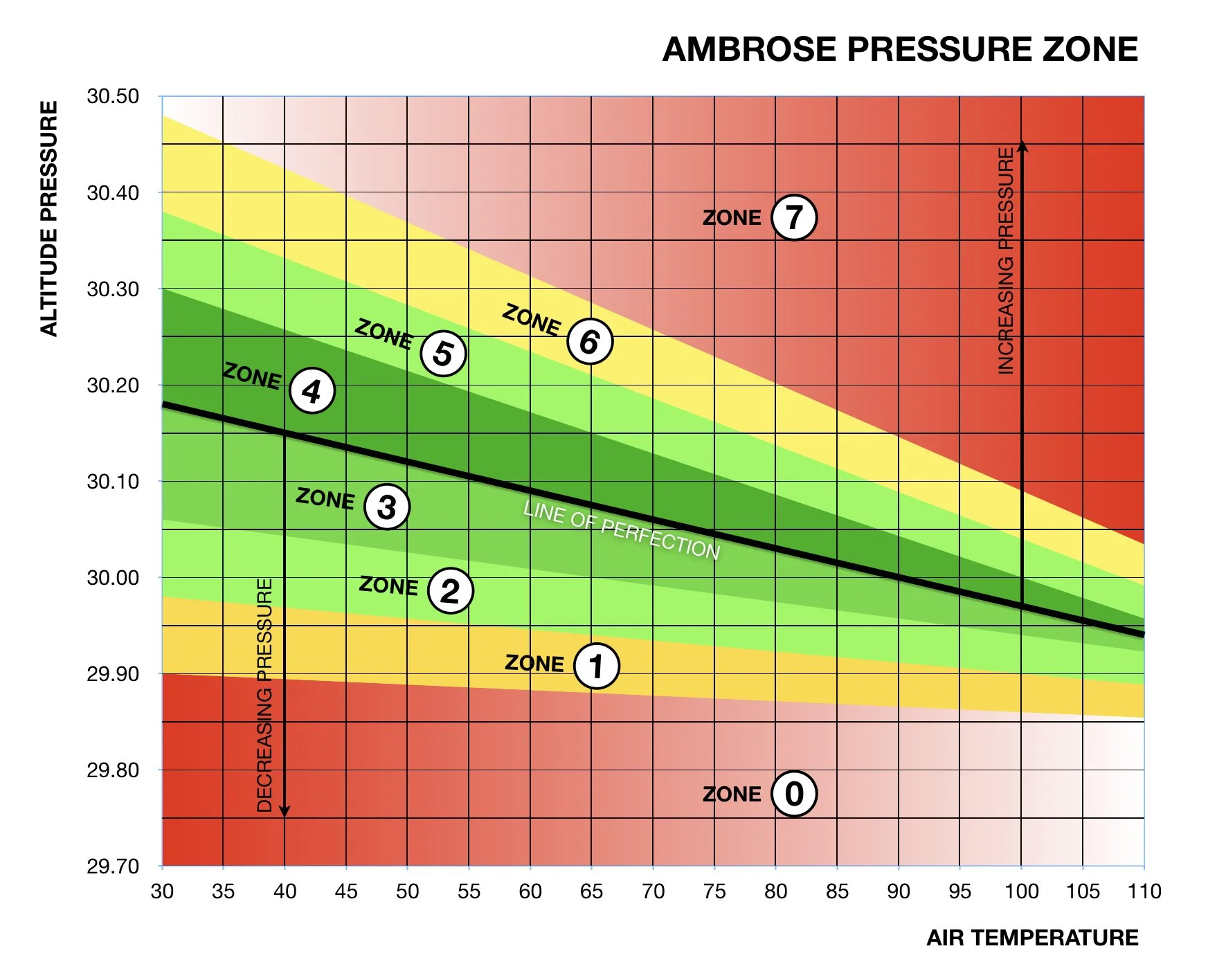
ZONE 0 — DANGEROUS! Very disorganized air due to relatively low pressure. Wing collapses are frequent. Flying in this air is not recommended.
ZONE 1 — ATTENTION: Air pressure is lower than you want. It is still flyable, but requires vigilance as frequent wing collapses are expected. Definitely less fun to fly, but possible.
ZONE 2 — GOOD: Conditions are good, but the pressure is on the lower side. Thermals may not be fully organized and the air can be a bit gusty. Pay attention to possible wing collapses, though they shouldn't be too frequent.
ZONE 3 — SWEET: Great conditions, though pressure is slightly on the lower side. Thermals will be good, but you may find them a bit disorganized at times.
ZONE 4 — SWEET (Ideal): Perfect conditions. Pressure is just slightly on the higher side. Thermals will be good and organized, with quick, stable climb rates. (This is my personal favorite zone to fly in!)
ZONE 5 — GOOD: Conditions are good, but pressure is on the higher side. Thermals will be more organized, but may be stronger. Pay attention to thermal strength and possible sharp edges.
ZONE 6 — ATTENTION: Air pressure is higher than you want. Still flyable, but if thermic air is expected, it will require very active piloting as thermals will be strong and sharp. Any collapse will be dynamic, so be ready to catch it. (If no thermals are present, the air is fun to fly in).
ZONE 7 — DANGER POTENTIAL: Pressure is too high to fly if thermic air is expected. Thermals will be very small, sharp, and rocket-like. If a wing collapses, it is likely to be very violent and dynamic. Strongly consider not flying if thermals are present.
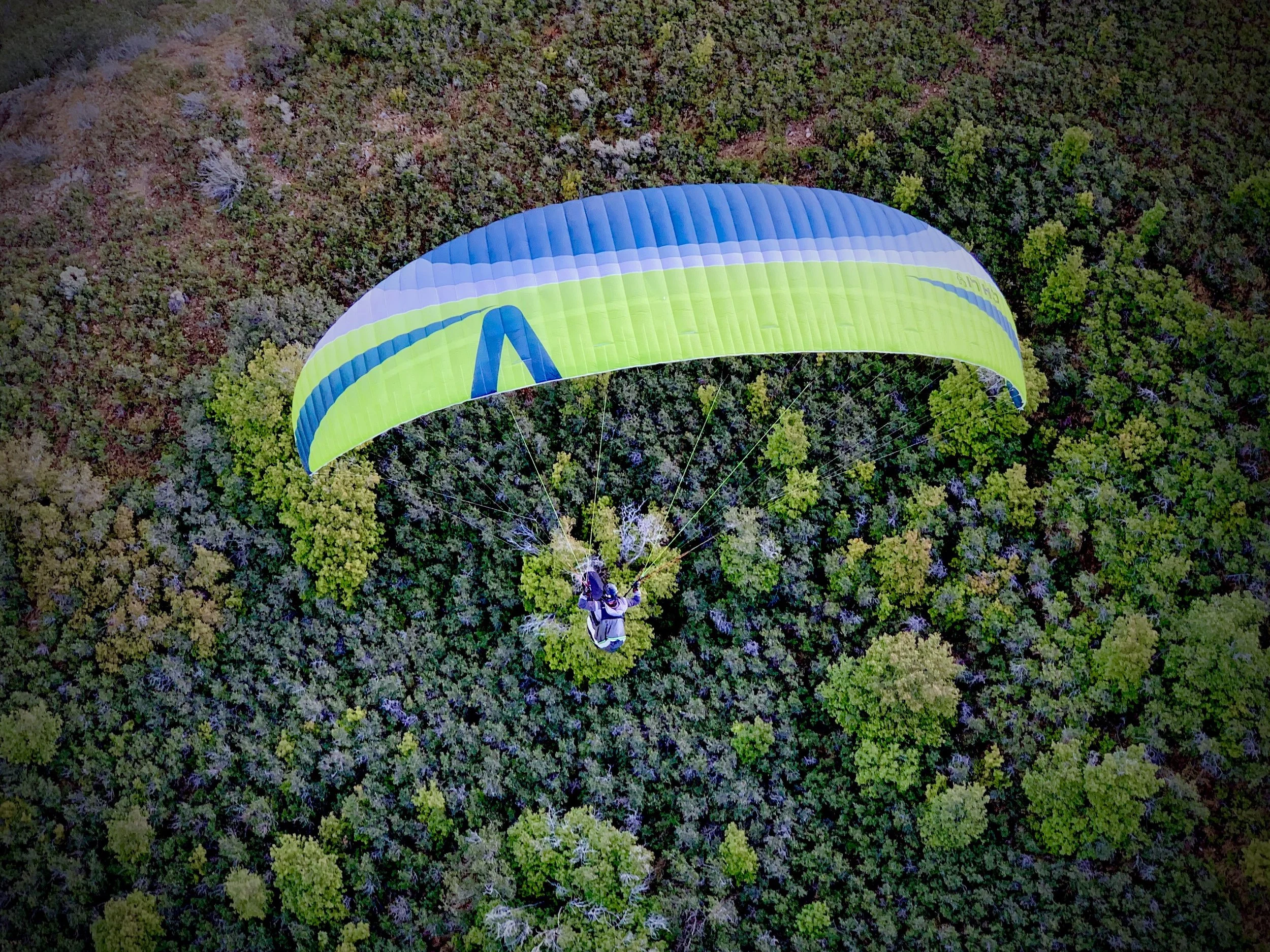
As you make your decisions on launch each day, I hope this Pressure Zone index helps you focus on conditions that are both safer and more fun to fly in.
Happy flying, and I hope to see you somewhere high above the Wasatch!